We're Here To
Help

BRC for Food Safety is one of the most recognised food safety standards for manufacturers, processors, and food businesses supplying retailers, brand owners, and major buyers.
Achieving BRC certification shows that your organisation has strong controls in place for food safety, product quality, legality, and operational standards. It helps businesses meet customer expectations, strengthen supply chain confidence, and access new commercial opportunities.
Our experienced team provides practical BRC support tailored to your business. Whether you need a gap analysis, help improving systems, audit preparation, or ongoing compliance guidance, we help make the process clear, structured, and manageable.
We are a consultancy that prepares organisations for certification. Certification is awarded by independent certification bodies.
BRC for Food Safety is an internationally recognised certification standard designed for food manufacturers and processors.
It provides a structured framework for managing food safety, product quality, legality, and operational controls. The standard covers key areas such as HACCP, site standards, product control, process control, personnel, and quality management systems.
BRC certification is widely used as a supplier approval requirement and is trusted by retailers, manufacturers, and food businesses across the global supply chain.
BRC certification is relevant to organisations involved in food manufacturing, processing, packing, and primary processing where robust food safety and quality controls are essential.

BRC certification forms part of a wider food safety and quality framework designed to help businesses manage risk, improve consistency, and demonstrate compliance. A successful system requires documented procedures, effective implementation, strong site controls, and regular review.
Our consultants support organisations through every stage of BRC preparation, helping strengthen systems, close gaps, and improve audit readiness.
BRC for Food Safety covers the systems, controls, and site standards needed to manage food safety, quality, and legality effectively.
- HACCP and food safety planning
- Quality management systems and documented procedures
- Site standards, housekeeping, and maintenance
- Product safety, authenticity, and traceability controls
- Process control and operational consistency
- Staff training, hygiene, and personnel practices
- Internal audits, corrective actions, and continual improvement
BRC helps businesses meet customer requirements while strengthening internal food safety and quality systems. It provides confidence to buyers and supports a more consistent, risk-based approach to operations.
- Supports supplier approval for major retailers and brands
- Demonstrates commitment to food safety and product quality
- Helps reduce risk of incidents, non-conformities, and recalls
- Improves traceability and operational control
- Builds trust across the supply chain
To achieve BRC certification, organisations must implement and maintain effective controls across food safety, quality, legality, and site operations.
- Documented food safety and quality management systems
- HACCP-based risk assessment and control measures
- Effective site standards and hygiene controls
- Product specifications, traceability, and labelling controls
- Staff competence, training, and awareness
- Internal verification, monitoring, and corrective action processes
BRC compliance is verified through structured audits that assess whether systems are documented, implemented, and effective in practice.
- Gap analysis and pre-assessment reviews
- Internal audits and system checks
- Review of HACCP plans and supporting records
- Site inspections and operational observations
- Audit preparation and corrective action support
Certification is not the end of the process. Ongoing review, internal auditing, and system maintenance are essential to keep standards strong and support future audits.
A typical ongoing compliance approach includes:
- Maintaining documented procedures and records
- Reviewing non-conformities and corrective actions
- Updating HACCP and food safety controls when needed
- Delivering refresher training and staff support
- Preparing for surveillance or recertification audits
BRC certification is a major step for food businesses that want to strengthen food safety systems, meet customer expectations, and grow with confidence. A well-prepared approach reduces stress, improves audit outcomes, and supports stronger day-to-day control.
At Compliancy Group, we combine practical food safety knowledge with hands-on compliance support, helping organisations prepare for BRC certification, improve systems, and maintain a stronger compliance position.
Our team has hands-on experience supporting businesses with BRC standards, helping you meet requirements with confidence and clarity.
We provide practical, business-focused food safety support that helps you improve standards, reduce risk, and stay audit-ready.
We deliver straightforward documentation and reporting that is easy to follow, well-structured, and aligned with compliance requirements.
You can rely on us for consistent, responsive support throughout your compliance journey, from preparation to ongoing improvement.
Our service is led by experienced consultants who offer tailored guidance, not just generic advice, to suit your business needs.
Continued involvement beyond certification to maintain standards, prepare for surveillance audits and strengthen long-term governance maturity.





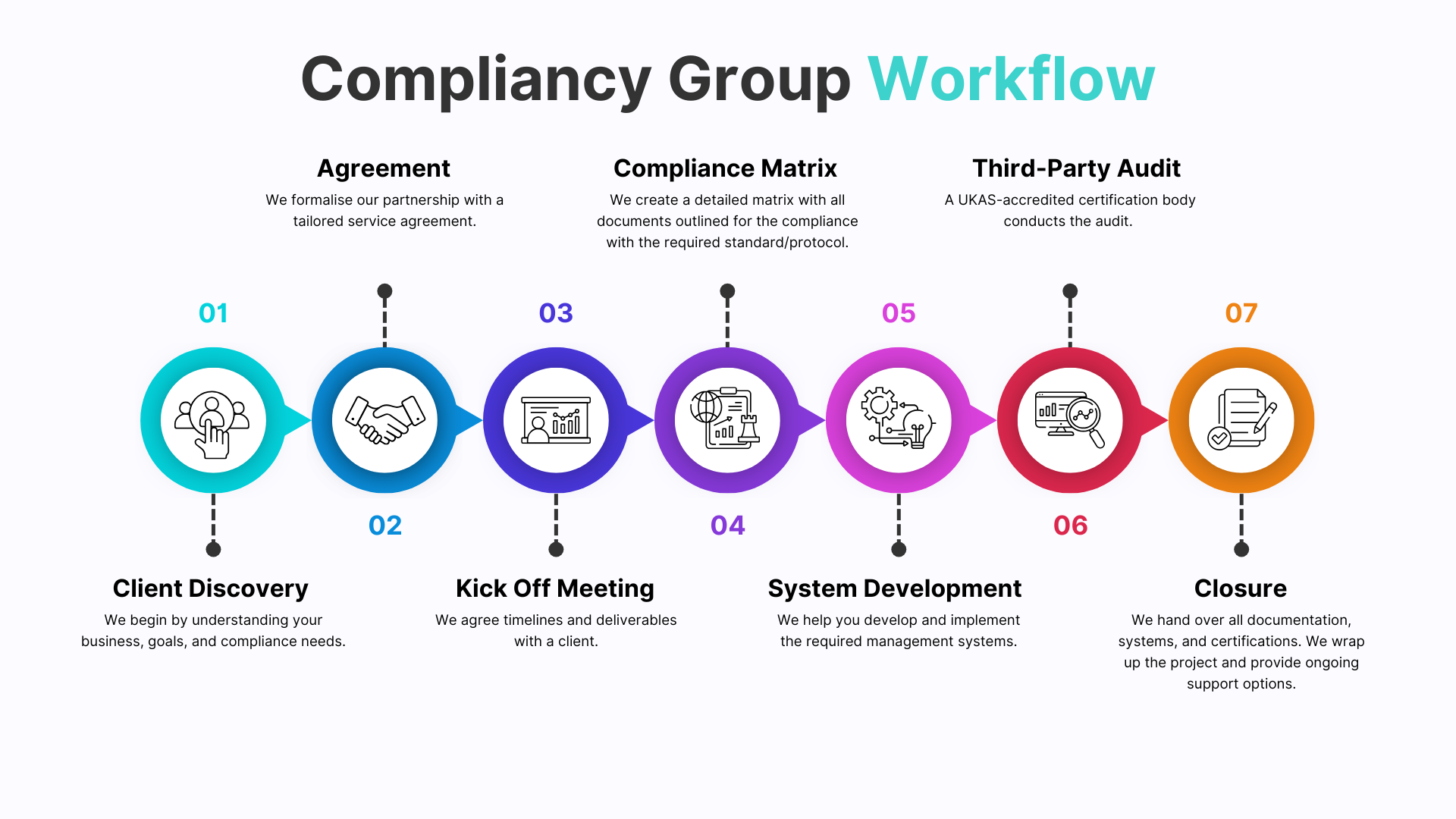
Our specialist team are here to help you through every stage of the certification process.
BRC originally stood for British Retail Consortium. The standard is now known as BRC and is widely recognised across the food industry for supplier approval and food safety compliance.
It is an internationally recognised food safety certification standard used by manufacturers and processors to demonstrate strong controls over food safety, quality, and legal compliance.
BRC is a detailed food safety standard commonly required by retailers and brand owners, while ISO 22000 is a broader food safety management system standard. Some businesses also choose FSSC 22000, depending on customer and market requirements.
No. HACCP is a preventive food safety system used to identify and control hazards, while BRC is a wider certification standard that includes HACCP as part of a broader food safety and quality framework.
While both HACCP and BRC certifications aim to enhance food safety, they have distinct focuses: Scope: HACCP is a preventive system applicable across various food sectors, while BRC is a comprehensive standard primarily aimed at food manufacturers and suppliers.
The purpose of BRC is to help food businesses demonstrate that they have effective systems in place to manage food safety, product quality, legality, and operational control.
BRC certification is not usually a direct legal requirement, but many retailers, manufacturers, and brand owners require it as part of supplier approval.
That depends on your customers, market, and business model. BRC is often preferred in retailer-led supply chains, while FSSC 22000 is often used by larger or multinational food manufacturers.