We're Here To
Help

BRC Storage and Distribution is a widely recognised certification standard for businesses involved in the storage, handling, and distribution of food, packaging, and consumer products.
Achieving BRC Storage and Distribution certification shows that your organisation has strong controls in place for product safety, quality, traceability, and legal compliance throughout the supply chain. It helps businesses meet customer expectations, support supplier approval, and build trust with retailers, manufacturers, and brand owners.
Our experienced team provides practical BRC support tailored to warehousing and logistics operations. Whether you need a gap analysis, help improving systems, audit preparation, or ongoing compliance guidance, we help make the process clear, structured, and manageable.
BRC Storage and Distribution certification is relevant to organisations involved in warehousing, storage, transport, and distribution where product safety and quality must be protected throughout the supply chain.

BRC Storage and Distribution certification forms part of a wider product safety and quality framework designed to help businesses manage risk, improve consistency, and demonstrate compliance. A successful system requires documented procedures, effective implementation, strong site and transport controls, and regular review.
Our consultants support organisations through every stage of certification preparation, helping strengthen systems, close gaps, and improve audit readiness.
BRC Storage and Distribution covers the systems, controls, and site standards needed to manage product safety, traceability, storage, handling, and transport effectively.
- Product safety and quality management systems
- Storage conditions and stock control arrangements
- Hygiene, housekeeping, and pest control
- Traceability and product identification controls
- Transport, loading, and unloading procedures
- Staff training, competency, and operational awareness
- Internal audits, corrective actions, and continual improvement
BRC helps logistics and warehousing businesses meet customer requirements while strengthening internal controls for product handling and supply chain integrity. It provides confidence to buyers and supports a more controlled, risk-based approach to operations.
- Supports supplier approval for major customers and brands
- Demonstrates commitment to product safety and quality
- Helps reduce risk of contamination, damage, and supply chain issues
- Improves traceability and operational control
- Builds trust across the supply chain
To achieve BRC Storage and Distribution certification, organisations must implement and maintain effective controls across product safety, hygiene, traceability, and logistics operations.
- Documented management systems and procedures
- Risk-based controls for storage and distribution activities
- Effective site standards and hygiene arrangements
- Product identification, traceability, and stock control systems
- Staff competence, training, and awareness
- Internal verification, monitoring, and corrective action processes
BRC Storage and Distribution compliance is verified through structured audits that assess whether systems are documented, implemented, and effective in practice.
- Gap analysis and pre-assessment reviews
- Internal audits and compliance checks
- Review of procedures, records, and traceability systems
- Site inspections and operational observations
- Audit preparation and corrective action support
Certification is not the end of the process. Ongoing review, internal auditing, and system maintenance are essential to keep standards strong and support future audits. A typical ongoing compliance approach includes:
- Maintaining documented procedures and records
- Reviewing non-conformities and corrective actions
- Updating controls when products, services, or operations change
- Delivering refresher training and staff support
- Preparing for surveillance or recertification audits
BRC Storage and Distribution certification is a major step for warehousing and logistics businesses that want to strengthen systems, meet customer expectations, and grow with confidence. A well-prepared approach reduces stress, improves audit outcomes, and supports stronger day-to-day control.
At Compliancy Group, we combine practical compliance knowledge with hands-on support, helping organisations prepare for BRC certification, improve systems, and maintain a stronger compliance position.
We understand the practical demands of storage and distribution certification and the expectations of customers, brands, and certification bodies. Our team helps identify gaps, strengthen controls, and improve audit readiness.
We combine certification support with real operational understanding, helping businesses apply BRC requirements in a way that works in practice, not just on paper.
We help businesses improve procedures, records, and supporting documents so systems are easier to manage, review, and present during audit.
From initial gap analysis through to audit preparation and ongoing improvement, we provide clear, practical support at every stage.
Our advice is tailored to your services, products, and logistics operations. We focus on practical solutions that strengthen compliance and support long-term success.
Continued involvement beyond certification to maintain standards, prepare for surveillance audits and strengthen long-term governance maturity.





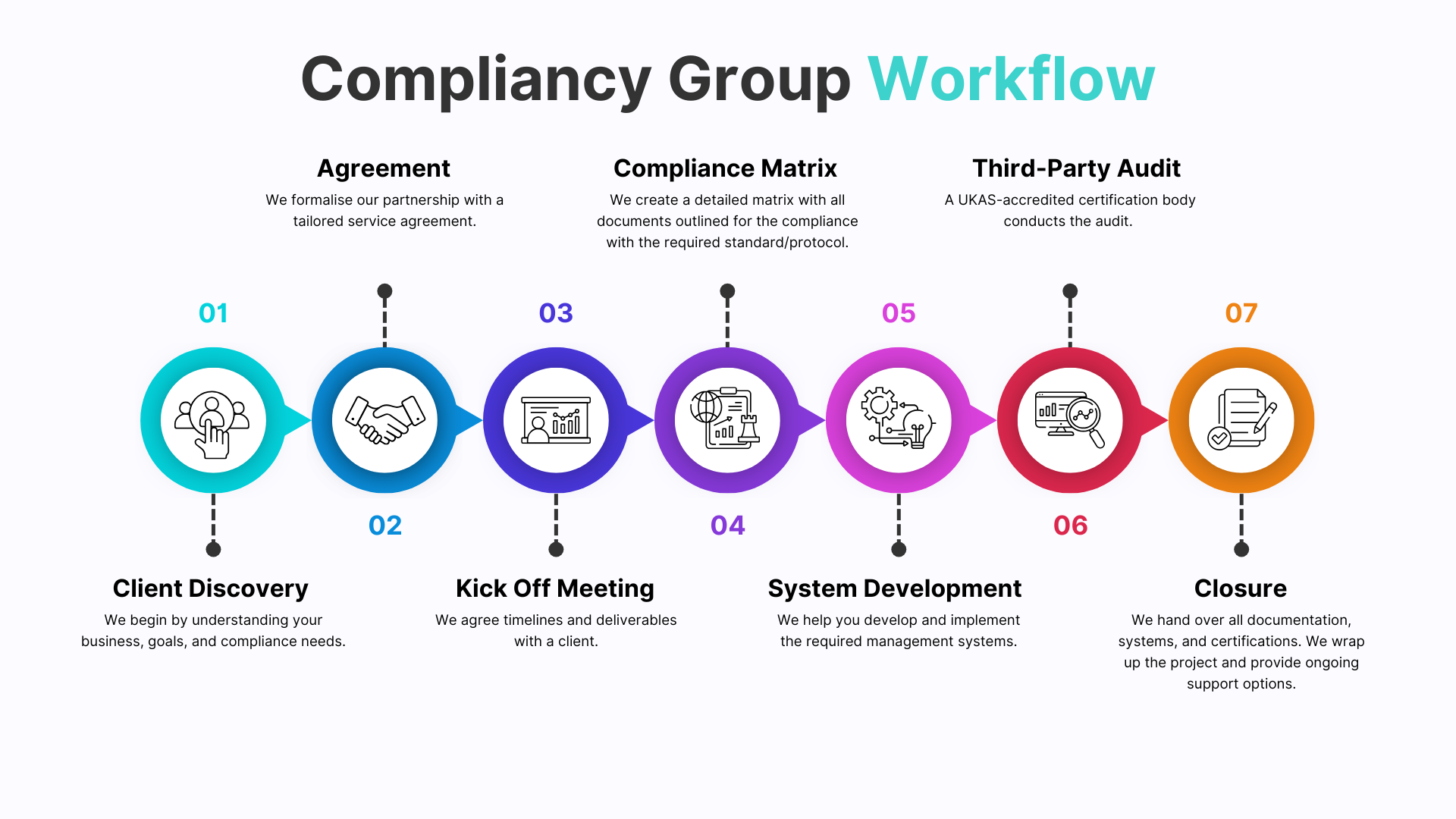
Our specialist team are here to help you through every stage of the certification process.
The BRC Storage and Distribution standard sets requirements for businesses that store, handle, and distribute products to ensure product safety, quality, traceability, and legal compliance throughout the supply chain.
BRC originally stood for British Retail Consortium. The standard is now known as BRC and is recognised globally across food, packaging, and supply chain operations.
BRC certification is not usually a direct legal requirement, but many retailers, brand owners, and manufacturers require it as part of supplier approval.
BRC standards are updated periodically, so the latest issue depends on the specific standard and current release. Businesses should always prepare against the version required by their certification body and customers.
No. ISO 9001 is a general quality management standard used across many industries, while BRC standards are more specific to product safety, quality, and supplier approval in regulated supply chains.
A BRC audit checks whether a business has effective systems and controls in place for areas such as traceability, storage conditions, hygiene, product handling, documentation, staff training, and corrective action.