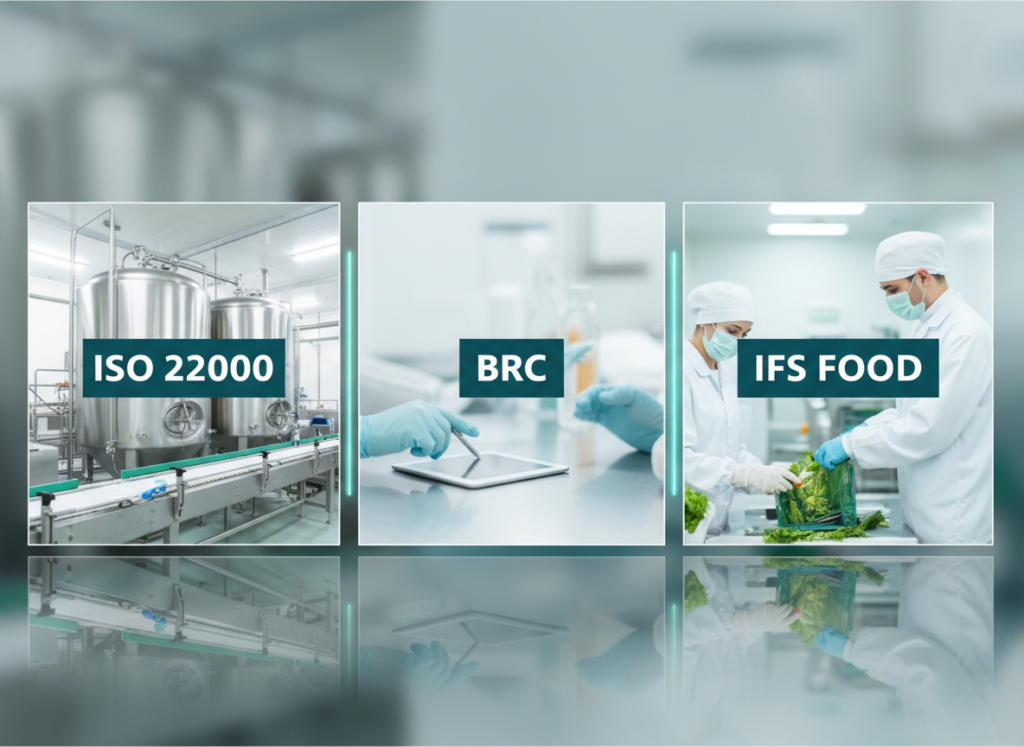
ISO22000 vs BRC for Food Safety vs IFS Food: Which One Is Right for Your Business?
Choosing the right food safety standard can feel overwhelming, especially when ISO22000, BRCGS Food Safety, and IFS Food are all recognised options. The right choice depends on your business model, customer expectations, supply chain position, and market goals.
What Is the Difference?
ISO22000
ISO22000 is an international standard focused on food safety management systems. It combines HACCP principles with a structured management system approach. It works well for businesses that want a globally recognised framework and a strong focus on risk management, process control, and continual improvement.
BRCGS Food Safety
BRCGS Food Safety is highly detailed and prescriptive. It is widely recognised by retailers, brand owners, and manufacturers, especially in the UK. It places strong emphasis on product safety, site standards, operational controls, and documented evidence. Businesses supplying major retailers are often asked for BRCGS certification.
IFS Food
IFS Food is also a strong food safety and quality standard, commonly recognised across Europe and by many international buyers. It focuses on food safety, product quality, legal compliance, and customer specifications. It is often a good fit for businesses supplying European markets or working with customers who specifically request IFS certification.
How Are They Valued and Recognised?
All three standards are respected, but they are valued in different ways:
- ISO22000 is valued for its international structure and compatibility with other ISO standards.
- BRCGS Food Safety is highly regarded in retail-driven supply chains and often seen as a strong commercial requirement.
- IFS Food is well recognised in European food markets and by businesses with cross-border supply relationships.
None is automatically better than the others. The best option depends on what your customers expect, where you want to trade, and how your business operates.
Which One Is Good for Your Business?
Ask yourself:
- Are you supplying retailers, manufacturers, or international buyers?
- Do your clients already expect a specific standard?
- Do you need a flexible management system or a more prescriptive food safety framework?
- Are you focused on UK growth, European markets, or wider international recognition?
Your answer will usually point you in the right direction.
How We Have Supported Clients
We have recently supported three different clients, each with a different route based on their business needs.
- One client needed ISO22000 because they wanted a management system that aligned well with their wider business processes and gave them internationally recognised structure.
- Another client pursued BRCGS Food Safety because retailer expectations and supply chain demands made it the strongest fit for their commercial goals.
- A third client chose IFS Food because of customer requirements and the need for recognition within their target market.
This is exactly why there is no one-size-fits-all answer. The right standard is the one that supports your operations, meets customer expectations, and helps your business grow with confidence.
Food safety certification should not be chosen just because it is popular. It should be chosen because it fits your business, your market, and your long-term plans. With the right guidance, businesses can avoid wasted time and investment and move towards the certification that brings the most value.
If you are unsure whether ISO22000, BRCGS Food Safety, or IFS Food is the right choice, speaking to someone who understands the differences can save a lot of time and frustration later.